

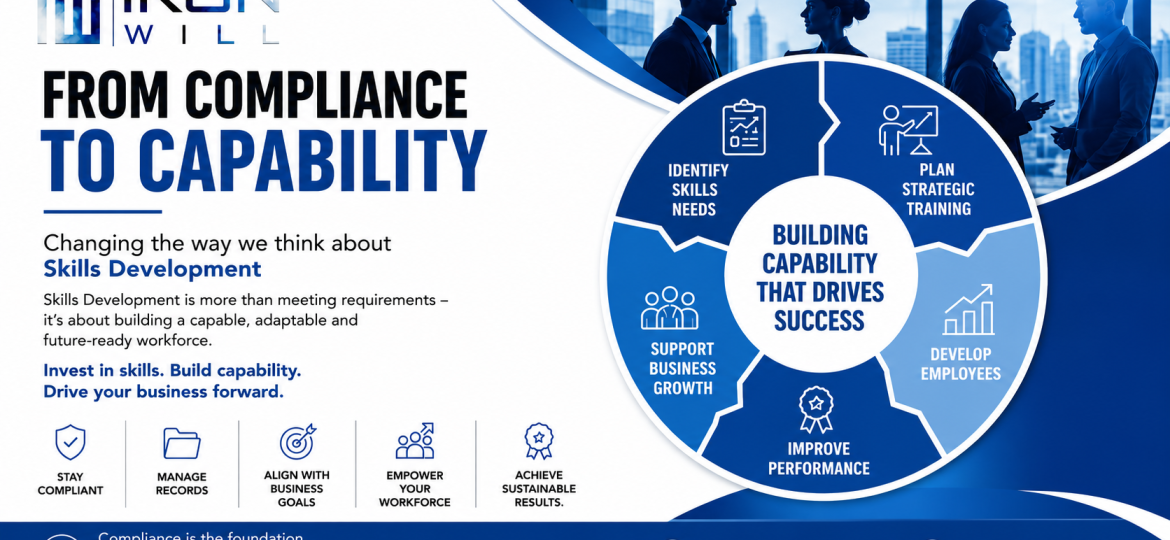
From Meeting Requirements to Building Capability
For many organisations, Skills Development is viewed primarily as a compliance requirement. It often becomes a focus during reporting periods or when preparing documentation for audits or funding applications.
However, organisations that treat Skills Development solely as a compliance exercise may miss a broader opportunity. A well-planned Skills Development strategy can help businesses strengthen workforce capability, address skills shortages, support succession planning and improve long-term organisational performance
The Skills Development Act, 1998 (Act No. 97 of 1998), was introduced to encourage the development of workforce skills in South Africa, improve the quality of working life, increase productivity and competitiveness, and support employment and economic growth. These objectives extend beyond compliance and highlight the strategic value of investing in people.
Compliance Is the Foundation—Not the Destination
South African employers often engage with Skills Development through legislative and regulatory processes, including:
- Developing workplace learning initiatives.
- Identifying current and future skills needs.
- Maintaining accurate training records.
- Submitting Workplace Skills Plans (WSPs) and Annual Training Reports (ATRs), where applicable to the relevant SETA requirements.
- Monitoring employee development initiatives.
These activities contribute to compliance, but they also provide valuable information that can help organisations make informed workforce decisions.
Building Organisational Capability
Capability refers to an organisation’s ability to perform effectively today while preparing for future business needs.
A strategic approach to Skills Development can help organisations:
- Identify critical skills gaps.
- Prepare employees for evolving job requirements.
- Improve workforce adaptability.
- Support leadership development and succession planning.
- Strengthen organisational resilience.
Rather than reacting to immediate training needs, organisations can align learning initiatives with long-term business objectives.
The Importance of Skills Gap Analysis
One of the most valuable planning activities is conducting a Skills Gap Analysis.
A Skills Gap Analysis helps organisations compare the skills employees currently possess with the skills required to achieve business objectives. The results can guide informed decisions about learning priorities, recruitment, mentoring and workforce planning.
Without this type of assessment, organisations may invest in training that does not address their most significant capability needs.
Creating a Culture of Continuous Learning
Skills Development is most effective when it forms part of an ongoing learning culture rather than a once-a-year exercise.
Organisations that encourage continuous learning often experience benefits such as:
- Employees keeping pace with changing technologies.
- Increased confidence in performing job responsibilities.
- Better collaboration across teams.
- Improved readiness for organisational change.
- Greater opportunities for career development.
Continuous learning can include formal training, workplace coaching, mentoring, job shadowing, e-learning and other structured development activities appropriate to organisational needs.
Aligning Skills Development With Business Strategy
Effective Skills Development begins with understanding where the organisation wants to go.
Business objectives may include expanding into new markets, adopting new technologies, improving operational efficiency or developing future leaders. Skills Development initiatives should support these objectives by identifying the knowledge and competencies employees need to succeed.
When learning investments are aligned with business strategy, organisations are better positioned to respond to change and remain competitive.
Measuring Success Beyond Attendance
Recording training attendance is important, but it does not on its own demonstrate whether learning has improved performance.
Organisations should also evaluate outcomes such as:
- Whether employees have developed new competencies.
- Improvements in workplace performance.
- Increased efficiency or productivity.
- Achievement of business objectives linked to learning initiatives.
- Application of new knowledge in day-to-day work.
Evaluating these outcomes helps ensure that Skills Development delivers meaningful value.
The Role of Accurate Record Keeping
Accurate training records remain an important component of effective Skills Development management.
Maintaining organised documentation can support:
- Internal reporting.
- Planning future learning initiatives.
- Evidence of completed training.
- Audit readiness.
- B-BBEE verification processes where applicable.
- SETA-related reporting requirements where applicable.
Good record management also enables organisations to monitor employee development over time.
Moving Beyond Compliance
Compliance requirements remain an important part of Skills Development in South Africa. However, organisations that integrate Skills Development into broader business planning are often better positioned to develop capable employees, respond to changing business environments and support sustainable organisational growth.
Viewing Skills Development as a strategic investment rather than solely a compliance obligation allows organisations to strengthen both their workforce and their long-term competitiveness.
How ironWILL Can Help
At ironWILL, we work with organisations to develop practical Skills Development strategies that align compliance requirements with broader business objectives. From workforce planning and Skills Development consulting to Employment Equity and B-BBEE support, our goal is to help businesses build capability while maintaining compliance.
By taking a proactive approach, organisations can move beyond simply meeting requirements and begin using Skills Development as a driver of long-term organisational success.
